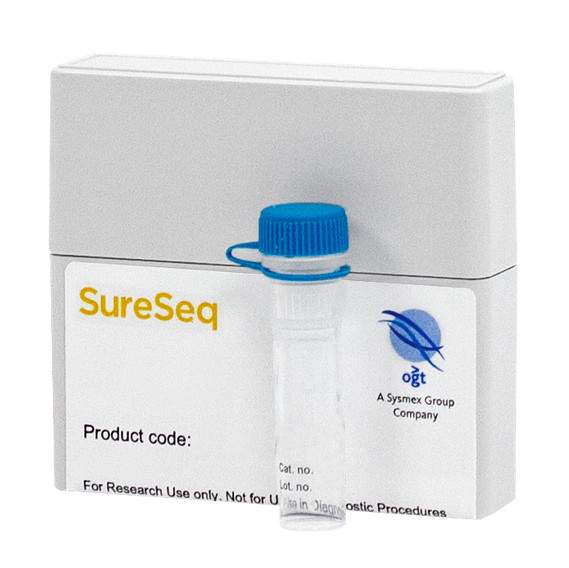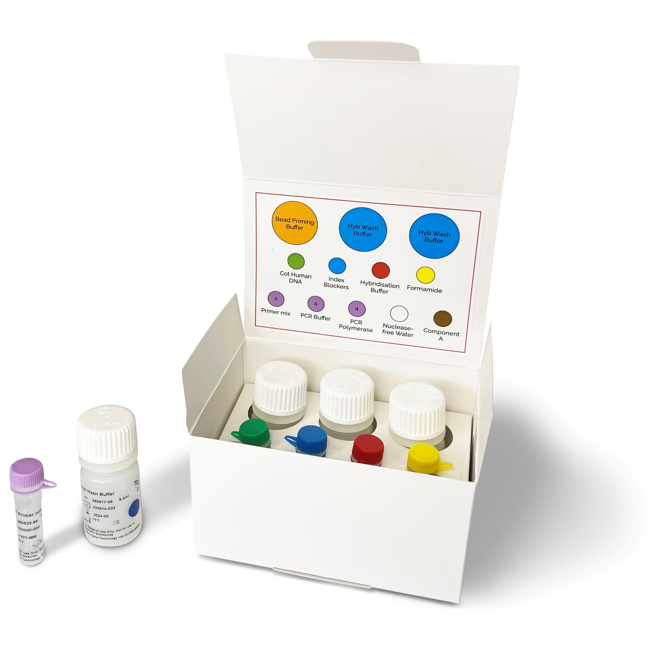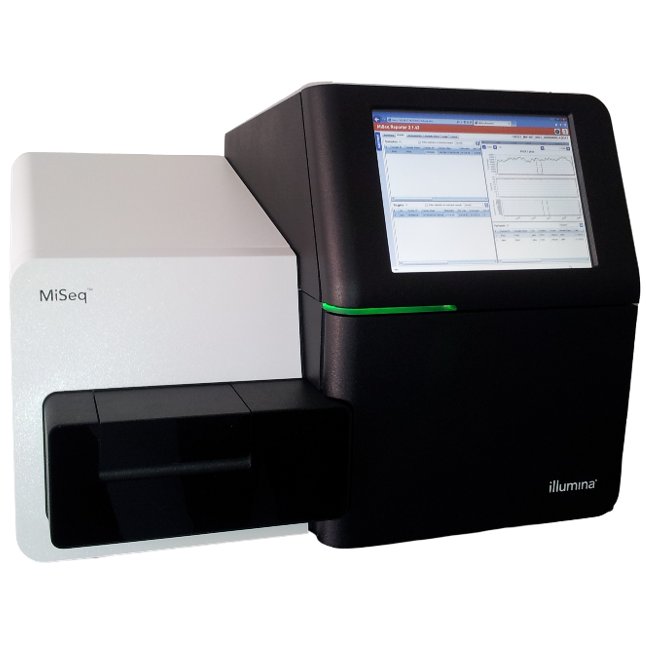
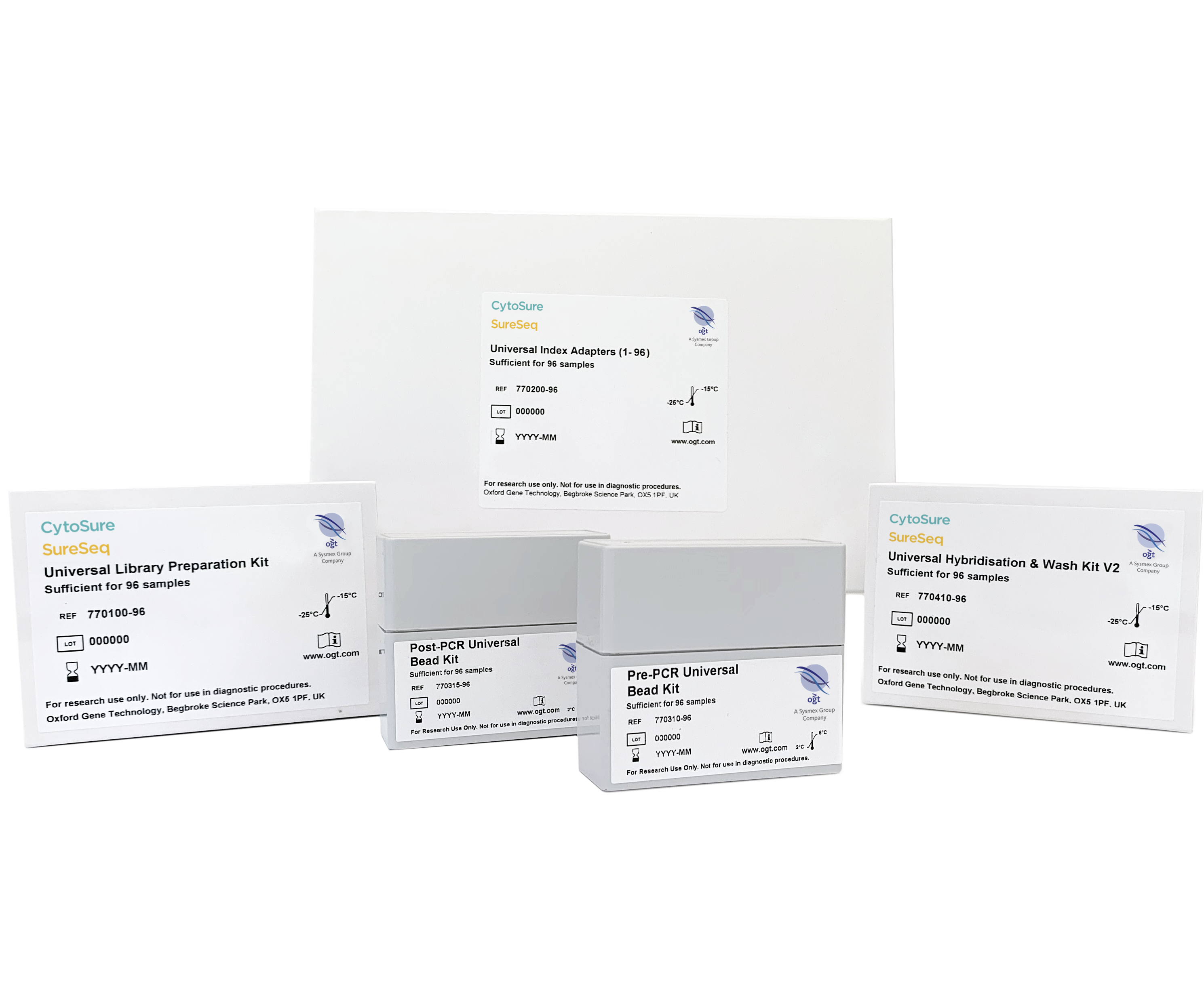
Library preparation protocols usually consist of lengthy multistep processes that require costly reagents and substantial hands-on time. We have listened to our customers’ feedback and developed the Universal NGS Workflow Solution V2, our latest and most advanced system for capture of targeted genomic regions and generation of NGS libraries.
OGT’s Universal NGS Workflow Solution V2, tested and optimised with both SureSeq™ and CytoSure® NGS panels, includes new combined multi-enzymatic fragmentation, end repair and A-tailing step. Together, with convenient bead concentration steps, the kit delivers increased convenience and flexibility for our highest quality library preparation.
The workflow has fewer clean up and QC steps, delivering scalability and reproducibility while minimising human errors. Additionally, the the inclusion of Unique Molecular Index (UMI) and up to 384 Unique Dual Index (UDI) adapters in the first phase of library preparation increases the kit multiplexing efficiency and confidence, enhancing capabilities to include sensitive applications. The included Universal Hybridisation & Wash Kit simplifies this key step while offering excellent coverage uniformity and reproducibility.

New enzymatic fragmentation, end repair and A-tailing improves sample throughput

All components have been developed and optimised together for assured high performance and reduced hands-on time

A simplified system including all necessary reagents, without the need for expensive supporting hardware; assuring a guaranteed output

Unique Dual Index (UDI) capabilities support up to 384 samples per sequencing run, increasing operational efficiency and reducing per-sample run costs
Based on scientists’ feedback, we have redesigned our workflow to ensure scientists achieve the most optimal NGS libraries, with one library preparation workflow across both our SureSeq and CytoSure Constitutional NGS products.
DNA fragmentation, end repair, A-tailing and index adapter ligation are carried out in a single step, eliminating several hours, manual handling processes and the use of mechanical sonicators or vacuum concentrating systems. With enhanced and convenient magnetic bead purification steps, the Universal NGS workflow increases the ease with which the process can be automated, enabling higher throughput and walk away NGS library prep steps.
The addition of up to 384 Unique Dual Indexes combined with pre-hybridisation pooling of samples, has simplified the most labour-intensive steps, significantly reducing hands-on processing steps, whilst increasing reproducibility and throughput.
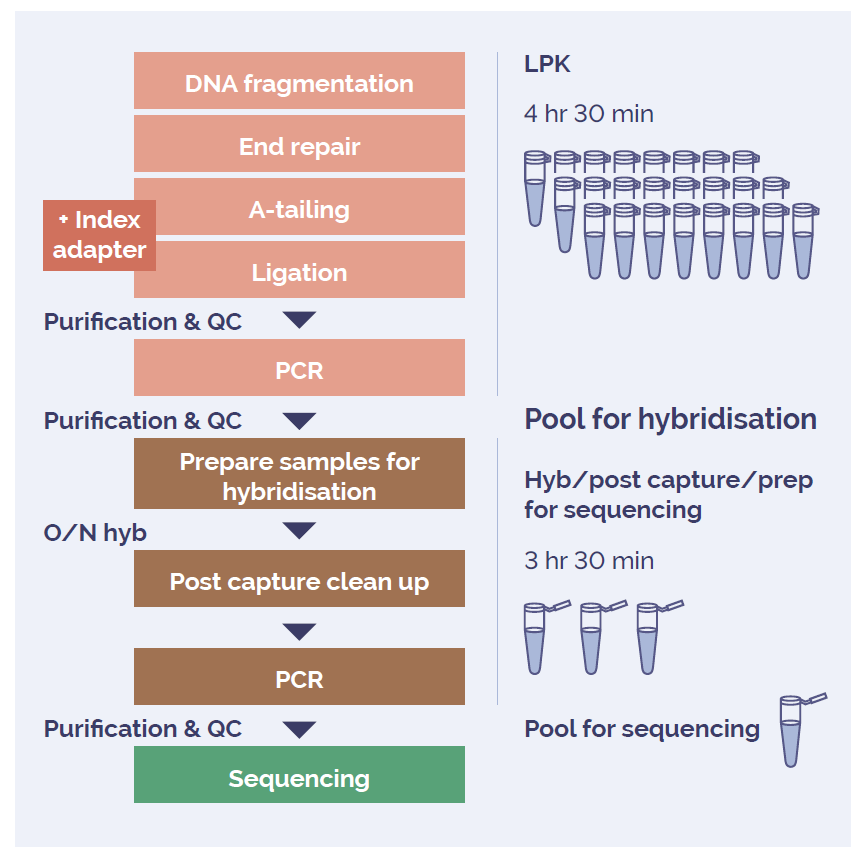
Figure 1: Universal Library Preparation Workflow
As NGS data is increasingly being relied upon as a front-line technology for clinical research, we know that customer priorities are for reliable and standardised implementation and quality control measures for all stages of the process. Our comparison data clearly show that the Universal NGS Workflow Solution V2 produces high and uniform coverage, even in the most challenging regions, helping our customers to deliver their goals faster. A combination of robust quality metrics are implemented to consistently deliver our promise and give our customers and partners the highest confidence that variants called are real and the number of false positive calls are minimal. The Universal NGS Workflow Solution V2 delivers high performance in the quality metrics that really matter, giving more reliable, more trustworthy data.
Multiplexing samples within sequencing runs through the use of indexes has massively improved sample throughput capacity. However, the potential for index cross-talk or read misassignment places constraints on an assay’s limit of detection. The new Universal NGS workflow uses a Unique Dual Indexing strategy to ensure accurate demultiplexing. Unlike combinatorial dual indexing, where every i5 and i7 index is shared with other samples either repeating across columns or down rows, our indexes are non-redundant, meaning index sequences are unique to a single sample. Our 384 UDIs available are designed to be colour- and GC-balanced to ensure high performance on 2- and 4-colour Illumina sequencers.
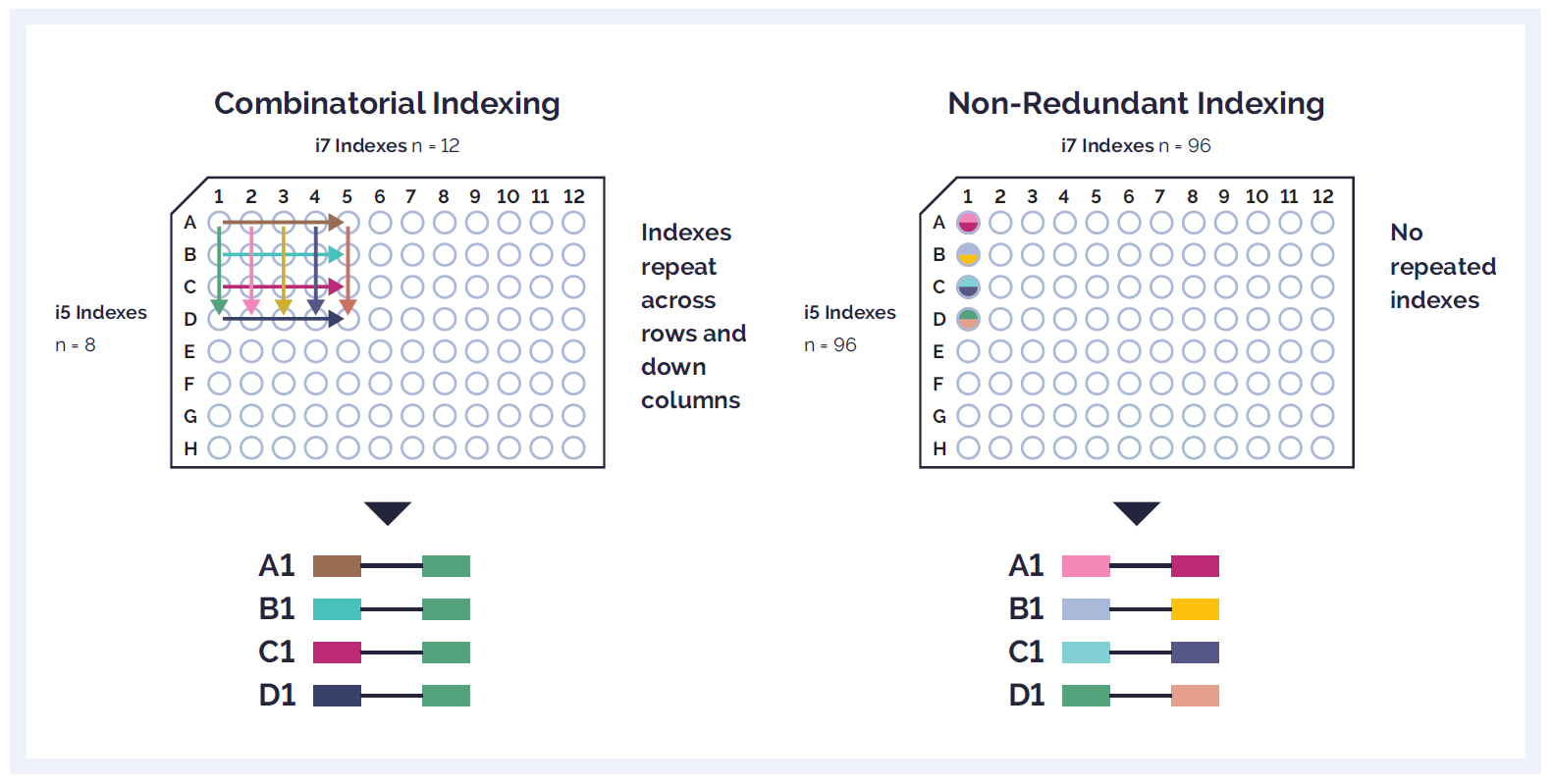
Figure 2: Combinatorial dual indexing barcoding (A) uses a plate matrix approach of i5 and i7 adapters that leads to unique combinations of non-unique indexes. In contrast, Unique Dual Indexing (B) uses completely unique indexes across the whole plate, avoiding any repetition in sequence (eg, 96 unique i5s and 96 unique i7s per 96-well plate).
Sensitive applications, such as sub 5% somatic variant discovery, require complete confidence in your data. De-duplication or the removal of PCR duplicates, and subsequent error correction is a key part of this process. Without it errors created during library preparation and/or sequencing cannot be distinguished from true variants. In the Universal NGS workflow each original DNA fragment is tagged with a Unique Molecular Identifier (UMI) before any PCR amplification meaning the true complexity of a sample can be determine during final data analysis.
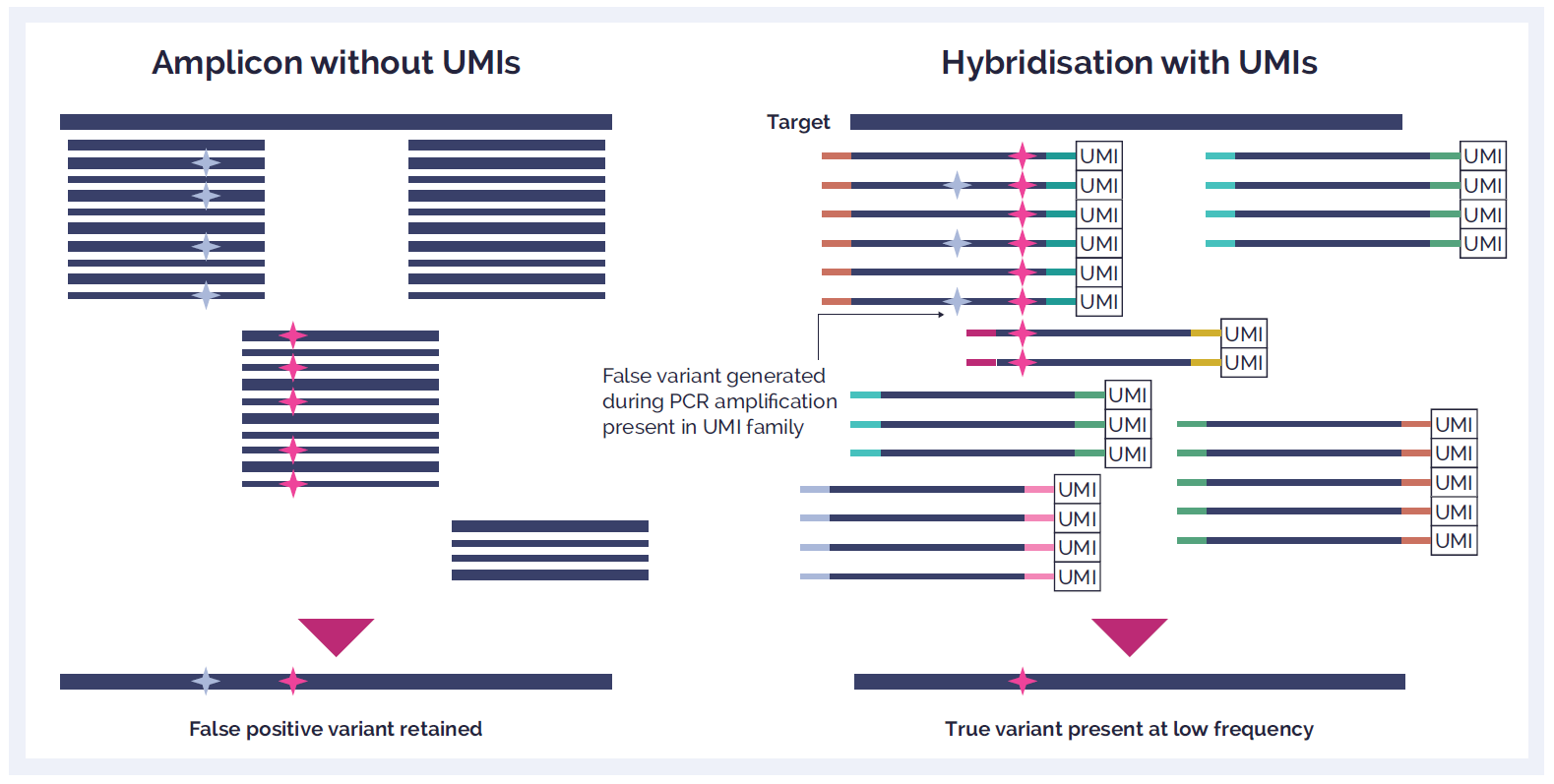
Figure 3: UMIs are short arbitrary oligonucleotides sequences that are attached to the library of DNA fragments by ligation prior to the amplification step. Reads that have the same UMI tag are from the same original DNA fragment and so the deriving PCR amplicons should be identical. If there are differences, a consensus can be generated allowing for removal of false positive variants. Without the use of UMIs, low-frequency variants can be confused with DNA polymerase errors produced during the amplification step as well as sequencing errors produced during the sequencing step. In the Universal workflow we combine information from the insert start and stop coordinates and UMI to identify and remove false positives
The Universal NGS Workflow Solution V2 works hand-in-hand with both CytoSure NGS Constitutional kit as well as with SureSeq targeted cancer enrichment panels, ensuring you get the most sensitive and reproducible variant detection and industry-leading coverage uniformity (Figure 4 & 5).
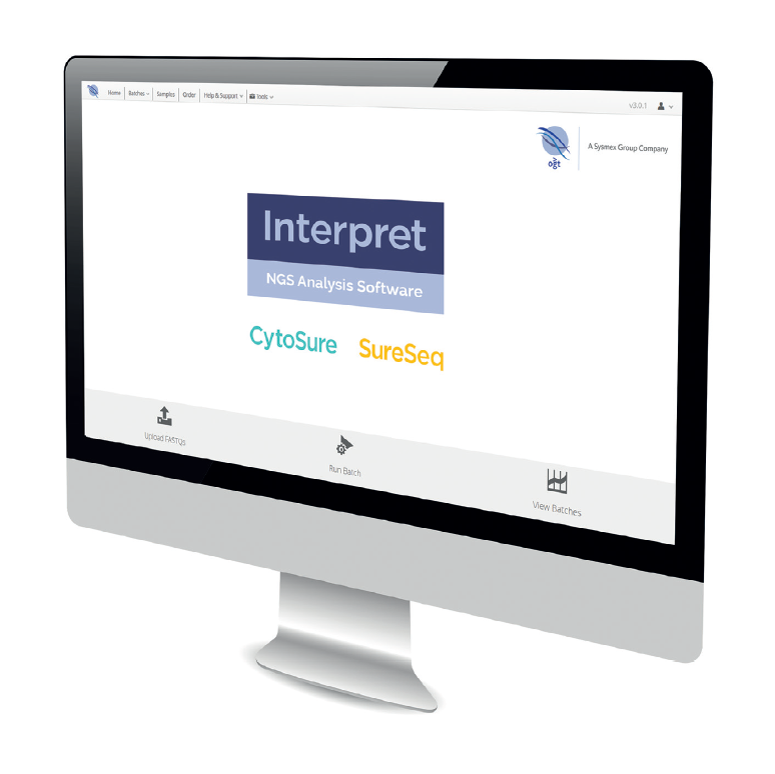
Interpret is OGT’s powerful, easy-to-use and customisable next-generation sequencing analysis solution, facilitating analysis and visualisation of a wide range of variants and structural aberrations. Coupled with a comprehensive and powerful dynamic filtering framework, the software delivers accurate calling of SNVs and indels, as well as structural aberrations, including ITDs, PTDs, CNVs, LOH and translocations. Interpret is designed to work seamlessly with all SureSeq NGS panels and offers flexible accessibility for data analysis; whether through a stand-alone computer, laboratory server or another web-enabled device. With a wide range of customisation options and links to various mutation databases, Interpret provides effortless translation of all your NGS data into meaningful results.
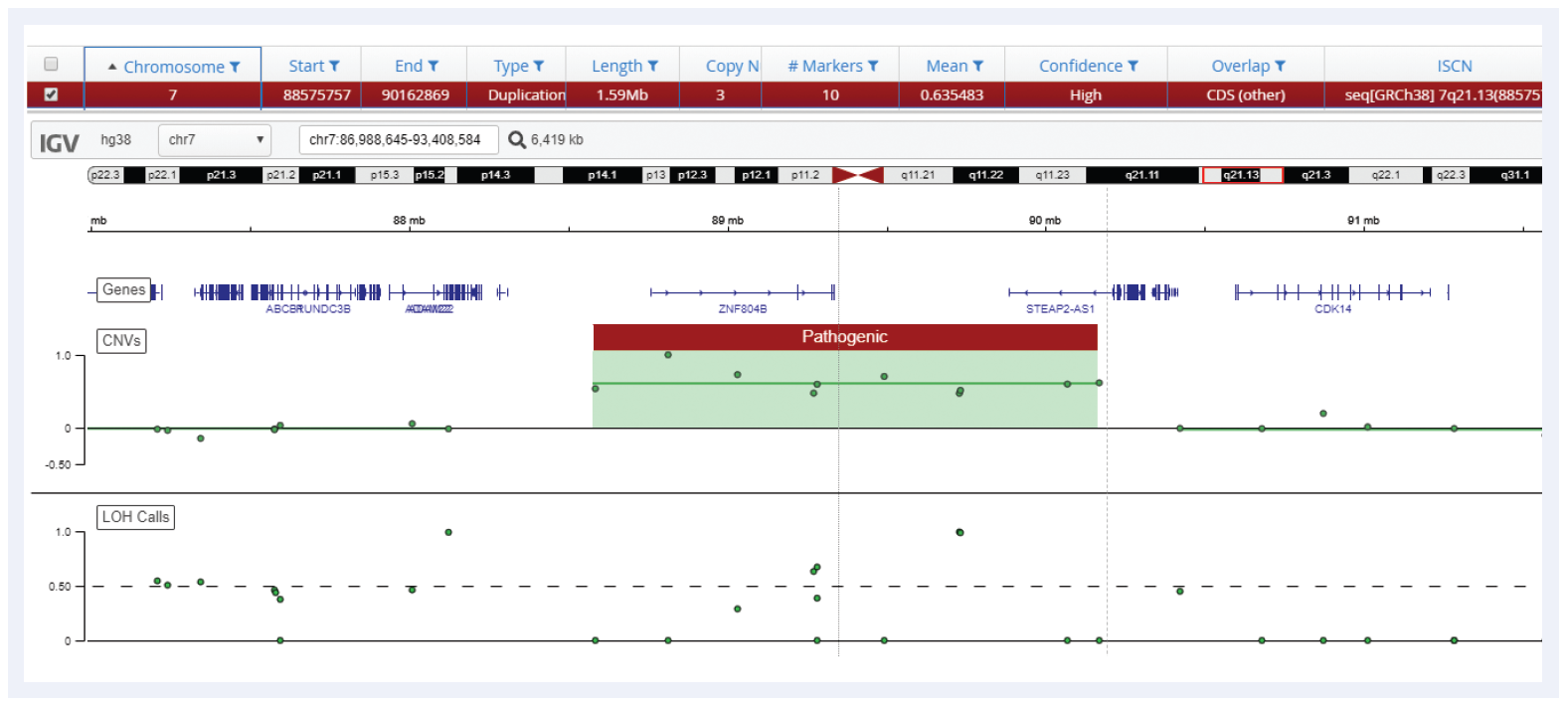
Figure 4: Interpret is able to call duplications with the same precision as microarrays, in this example a 1.59 Mb duplication on chromosome 7 is detected using the CytoSure Constitutional NGS Panel.
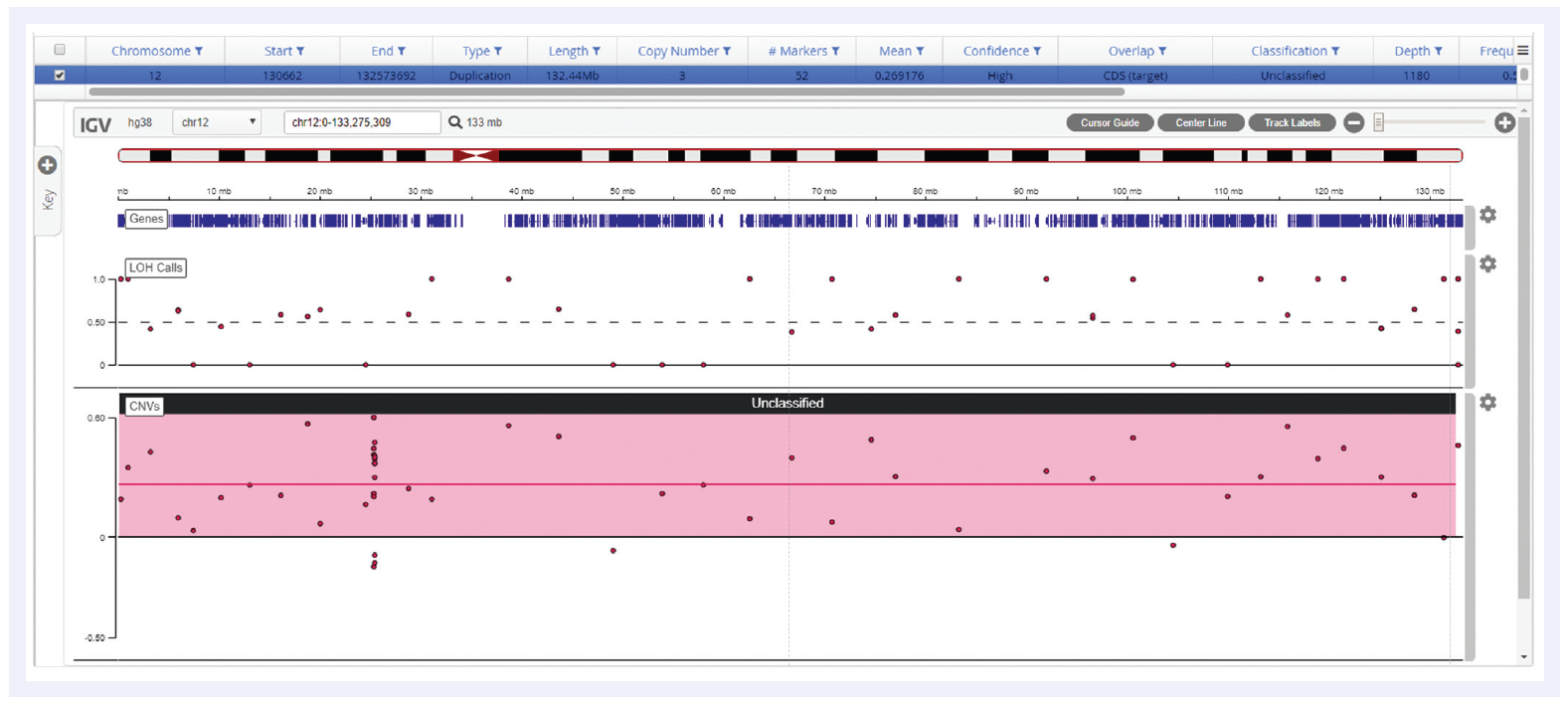
Figure 5: Detection of trisomy 12 using the SureSeq CLL + CNV Panel, showing a reliable gain call across the whole chromosome. Interpret enables CNV detection ranging from loss of a single exon to full chromosomal arms and trisomies.

 Visit USA site
 Visit Canada site