
Lucy Georgieva1, Tom Huckvale1, James Reid1, Jolyon Holdstock1, Matthew Rooney1, Jackie Chan1, Graham Speight1
1Oxford Gene Technology (OGT)
Fusion genes are key drivers of many cancers, particularly myeloid malignancies. While fusion detection has traditionally relied on fluorescence in situ hybridization (FISH) and reverse transcription polymerase chain reaction (RT-qPCR), use of targeted next-generation sequencing (NGS) is increasingly used to characterize a broad range of relevant targets in a single assay without prior knowledge of the fusion type. Measurable Residual Disease (MRD) assessment requires longitudinal, sensitive quantification of ultra-low abundance fusion transcripts. In this study we assessed the capability of OGT’s SureSeq™ myPanel Myeloid Fusion MRD Panel to detect a range of fusion types at levels suitable for MRD assessment.
Contrived RNA was converted to cDNA, followed by library generation and target enrichment (Figure 1). Enriched libraries were sequenced on an Illumina NextSeq, 2 x 150bp.
The SureSeq myPanel Myeloid Fusion MRD Panel targets approximately 30 myeloid fusions relevant to AML research. Hybrid capture baits support agnostic partner detection (Table 1).
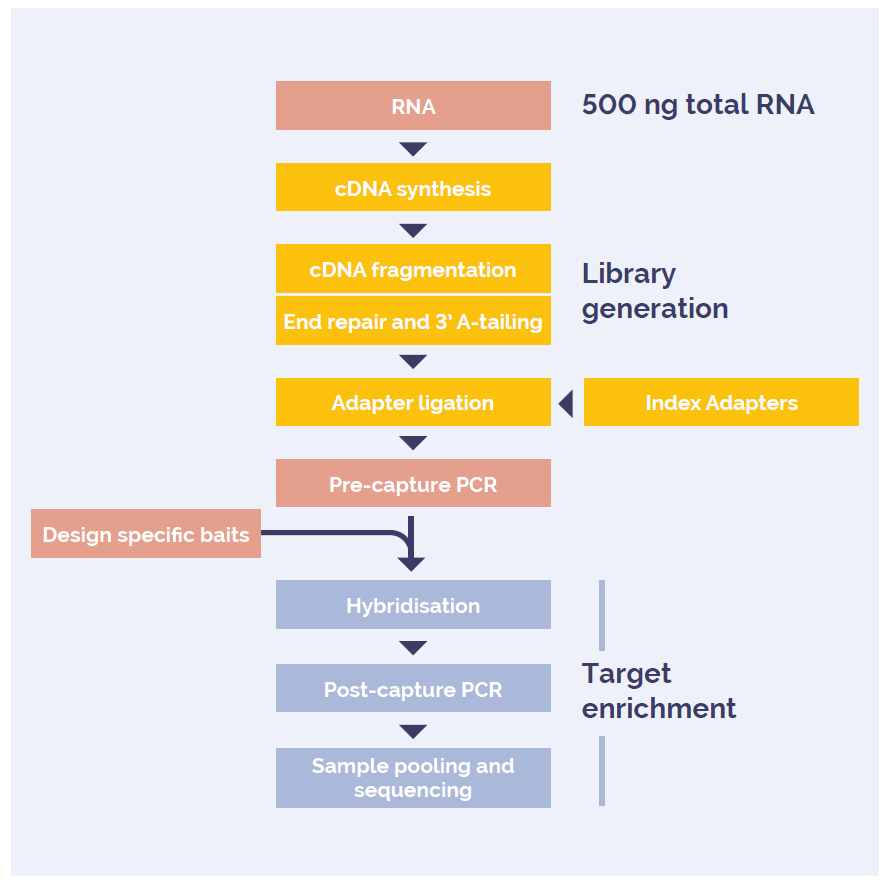
Figure 1. RNA sample to sequencing in 2 days with minimal hands-on time.
This study utilized 16 commercially available fusion-positive cell lines with a range of known fusions targeted by the panel including KMT2A rearrangements, BCR::ABL1, PML::RARA, RUNX1::RUNX1T1, ETV6::RUNX1 as well as rare fusions. A further 4 control samples were used as negative controls. Serial dilutions in a fusion-negative control down to 4.0 log₁₀ reduction from the neat samples (equivalent to a 1 in 10,000 dilution) to establish MRD level detection levels.
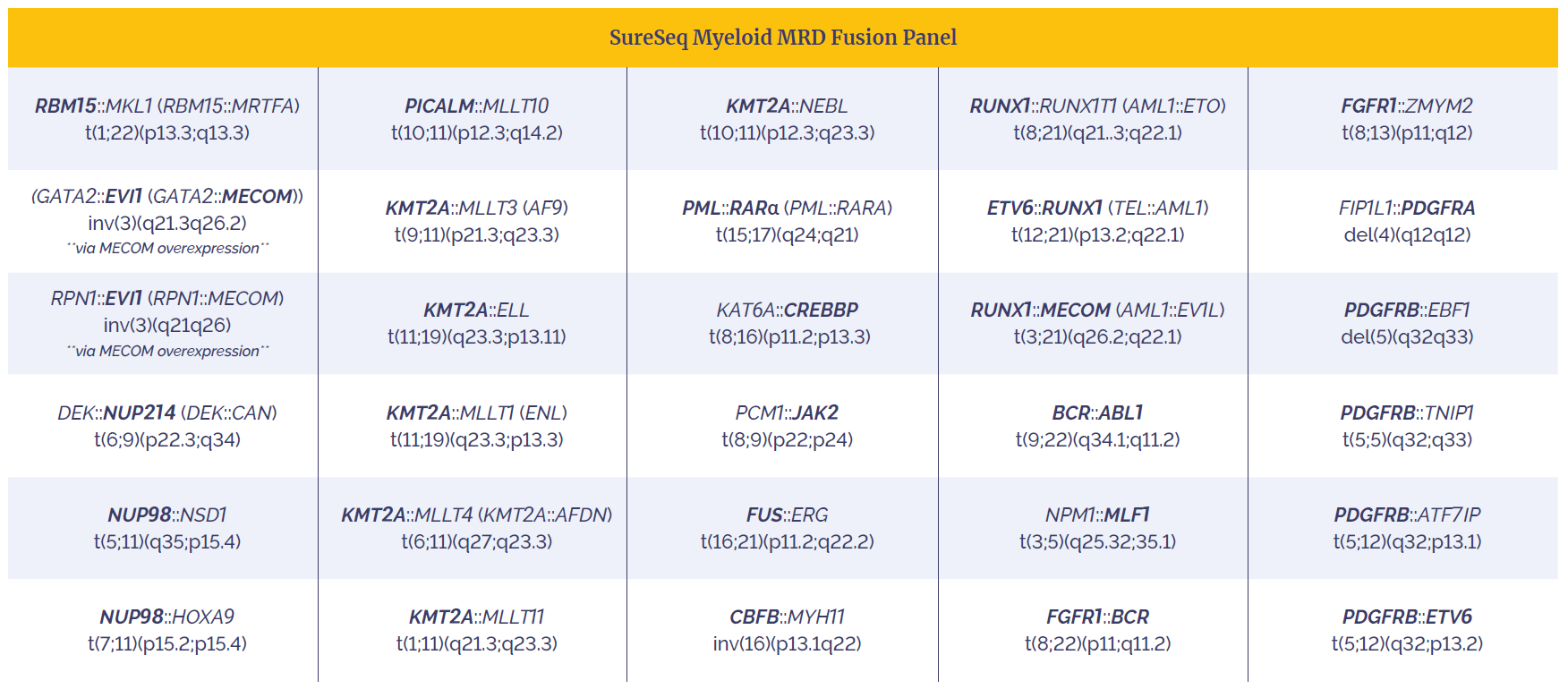
Table 1: 30 of the most relevant fusions for AML research are targeted by the SureSeq myPanel Myeloid Fusion MRD Panel.
Sequencing data was analyzed using OGT’s cloud-based Interpret software. Unique molecular identifiers (UMI) based deduplication enabled sensitive fusion detection, with exon-level breakpoint resolution. Fusion detection is confirmed by the presence of ≥5 UMI-deduplicated supporting reads that span the fusion breakpoint. Detection of translocations in MECOM are reported as overexpression in the software.
All expected fusions targeted by the panel were detected as shown by the presence of deduplicated supporting reads covering the fusion breakpoints, see Tables 2 and 3.
Highly expressed fusions including RUNX1::RUNX1T1 (KASUMI-1), ETV::RUNX1 (REH), & ETV6::ABL2 (HT93), remained detectable at a 4.0 log₁₀ reduction (1 in 10,000 dilution), with ≥ 5 supporting reads reported by the pipeline. BCR::ABL1 (K562) and FUS::ERG (YNH-1) fusions were detected at 3.7 log₁₀ reduction (1 in 7,500 dilution). The results demonstrate the suitability of this NGS assay for MRD assessment (Table 2).
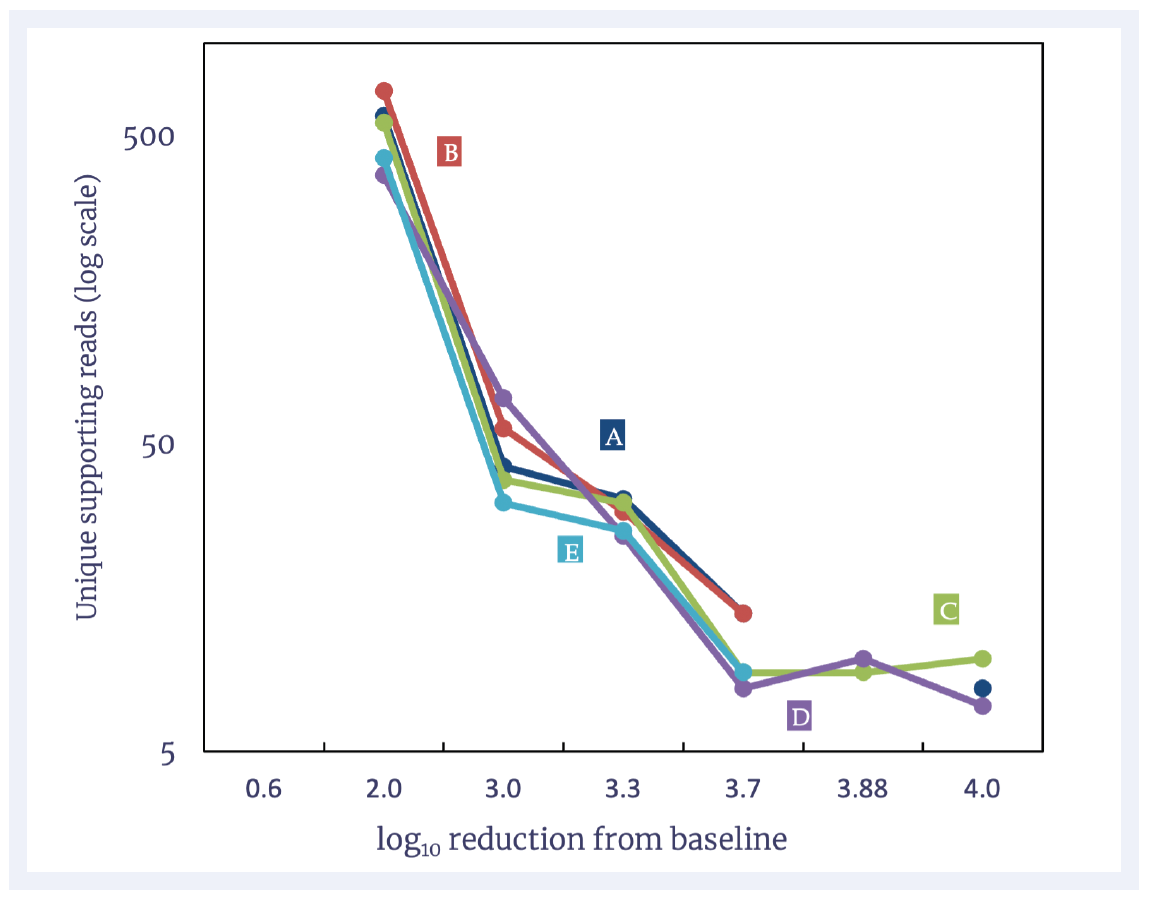
Figure 2: Plot showing highly expressed fusions remaining detectable for KASUMI-1, REH and HT93 cell-lines when RNA is diluted to 4.0 log10 reduction from baseline. K562 and YNH-1 expected fusions were detectable at a 3.7 log10 reduction from baseline.

Table 2. 5 cell-lines exhibited highly expressed fusions, which remained detectable at 3.7 – 4.0 log10 reduction from baseline.
In the remaining cell lines, fusion-supporting reads were detected between 2.0 -3.3 log₁₀ reduction (1 in 100 to 1 in 2,000 dilution) demonstrating a broad range of fusion types reported, with NGS able to identify the breakpoint location of each.
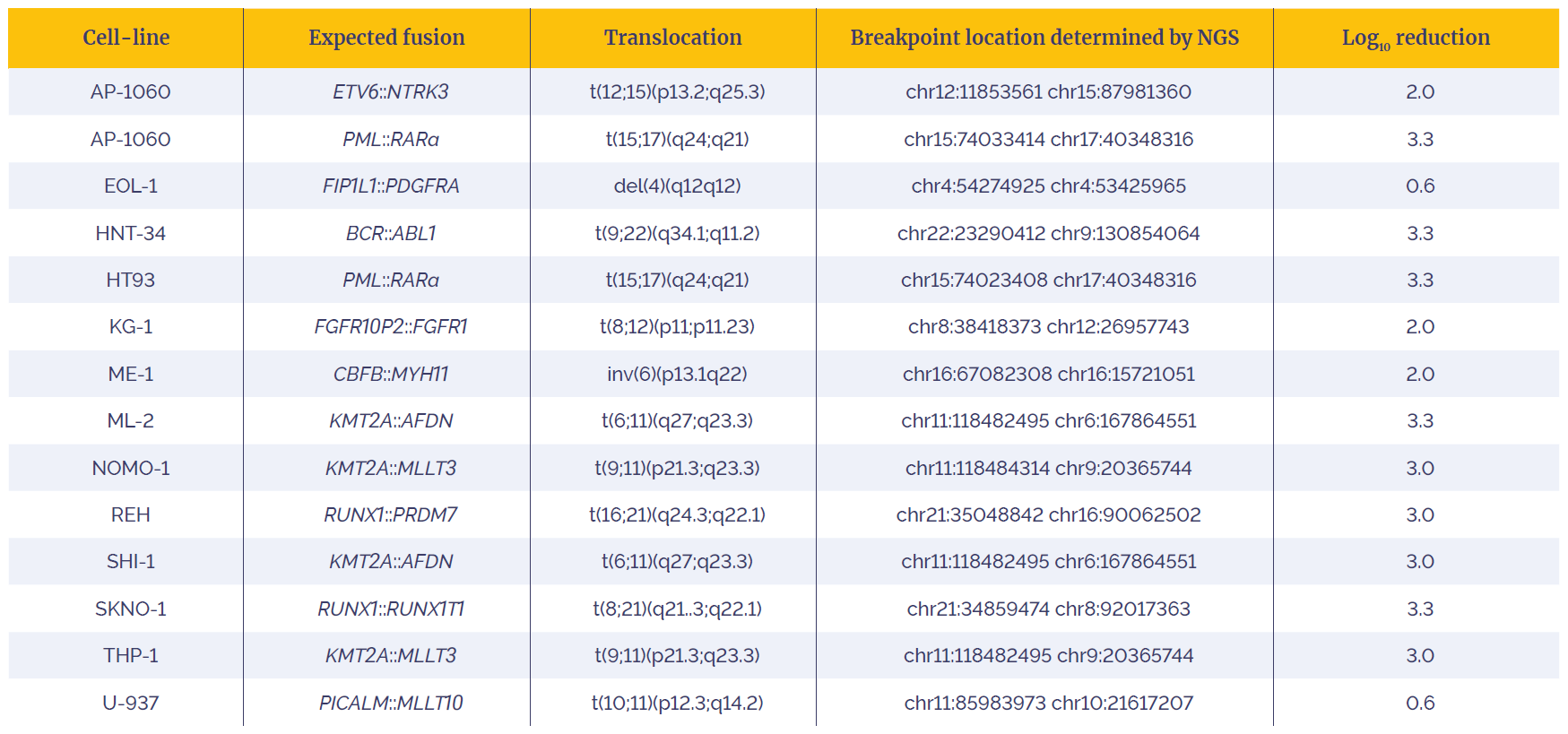
Table 3: All expected fusions were detected with the assay, at a range of expression levels.
MECOM expression was detected down to 4.0 log₁₀ reduction in the cell-line HNT-34 (Figure 3). Detection of this expression level is important for identifying MECOM translocations, for example inv(3)(q21q26) and t(3;3)(q21;q26). Normalized expression levels of MECOM were reported in Interpret alongside the reported fusions.
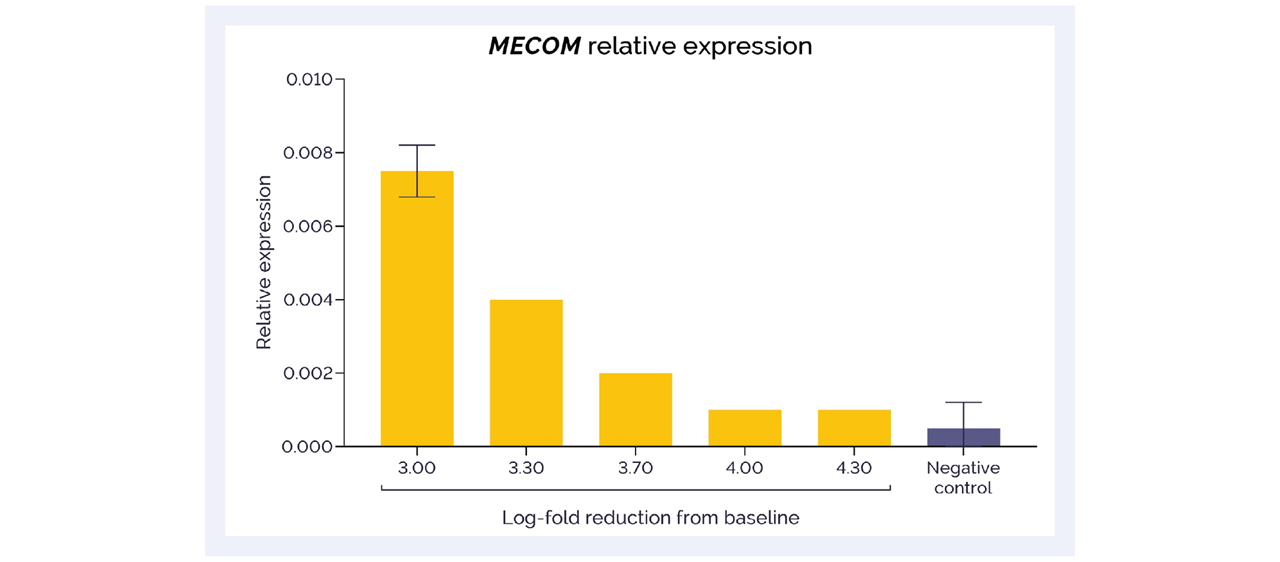
Figure 3. Relative expression of MECOM across serial log-fold reductions from baseline in HNT-34.
The SureSeq myPanel Myeloid Fusion MRD Panel uses RNA-based, partner-agnostic detection to identify KMT2A rearrangements in a single workflow. Across multiple cell-line models, fusion-supporting reads were detected for KMT2A::AFDN and KMT2A::MLLT3, with reads and breakpoint localization retained after a 3.0 log₁₀ reduction in RNA input versus the neat sample. This supports sensitive detection of common, rare and potentially novel KMT2A fusions across diverse partners.
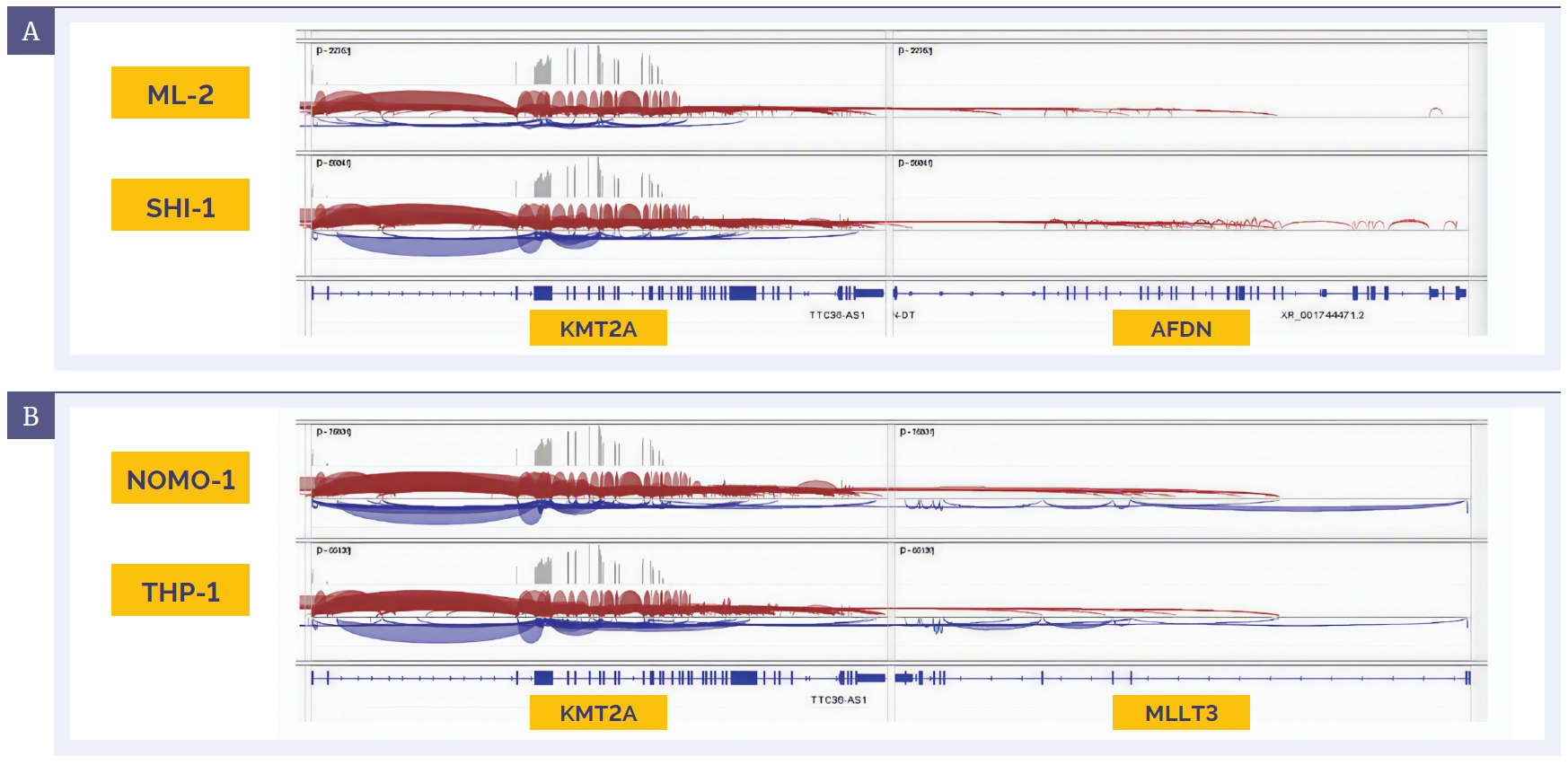
Figure 4. Split view in IGV showing fusion reads across two genes: Panel A shows unique supporting reads for KMT2A::AFDN fusions in ML-2 and SHI-1 cell lines when diluted 3.0 log10 reduction from baseline; Panel B shows unique supporting reads for the KMT2A::MLLT3 fusion in NOMO-1 and THP-1 cell lines.
These results demonstrate the suitability of OGT’s SureSeq myPanel Myeloid Fusion MRD Panel for the sensitive MRD assessment of fusion transcripts relevant to AML research.
All expected fusion transcripts were detected across the cohort, with breakpoint locations accurately identified by Interpret software at exon-level resolution.
The assay supports monitoring of MECOM translocation events through sensitive detection of MECOM overexpression, with measurable expression maintained following a 4.0 log₁₀ reduction in HNT-34 cell-line RNA.
Partner-agnostic analysis enabled identification of distinct KMT2A fusion partners within a single workflow, while both fusion transcripts and MECOM expression remained measurable across
serial dilutions.
These findings highlight the suitability of targeted RNA sequencing for MRD assessment, enabling sensitive, longitudinal monitoring of fusion transcripts and expression-based biomarkers within a single streamlined assay.
SureSeq: For Research Use Only; Not for Diagnostic Procedures.
Call +44 (0)1865 856800 Email contact@ogt.com
Send us a message and we will get back to you
 Visit International site
 Visit USA site
