Welcome to the latest edition of DNA Dispatch, the quarterly newsletter from OGT, your hybridization experts.
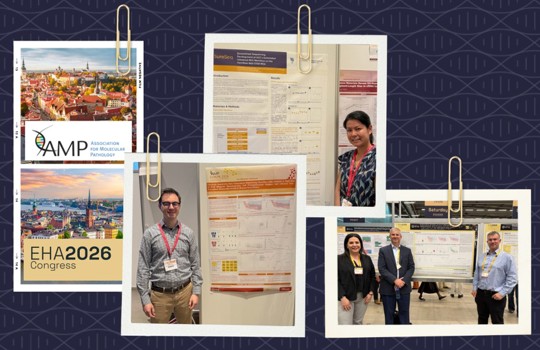
It has been a busy summer of conferences in Europe, during which OGT solutions were featured in impactful studies from leading experts and our own colleagues.
→ Measurable residual disease (MRD) analysis in a retrospective study of AML samples, by Sean Glenn, PhD (Roswell Park Comprehensive Cancer Center)
→ The use of error-corrected sequencing to investigate MRD status and identify AML relapse risk following transplantation, by Phillip Galbo, PhD (Roswell Park Comprehensive Cancer Center)
→ The development of an automated universal next-generation sequencing (NGS) workflow, by Sandra Kachhia (OGT)
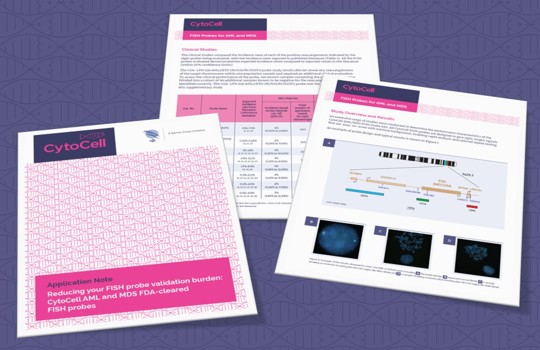
FDA-cleared CytoCell® FISH probes for AML and MDS demonstrated >98% analytical sensitivity, 100% analytical specificity, excellent reproducibility and robust stability across extensive multi-site testing.
This data highlights the potential to reduce validation burden, minimize repeat testing and improve laboratory workflow efficiency while maintaining confidence in assay performance.
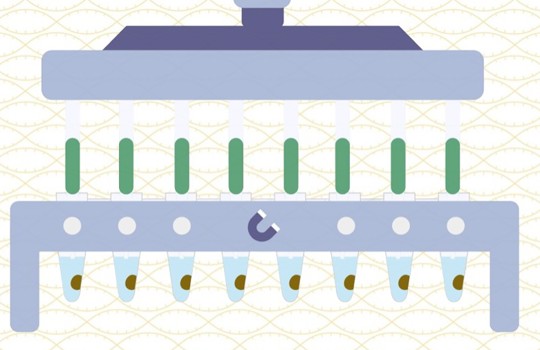
Watch a step-by-step workflow video from our NGS specialists on the pre-capture PCR of the ligated library and its following purification.
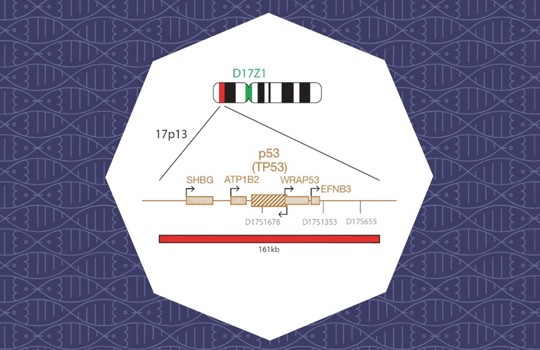
For the latest in our series of FISH and NGS quizzes we've set you the challenge of interpreting different FISH chromosome maps and correctly filling in the blanks of the probe description.
Put your FISH skills to the test and find out if you can score 100%.
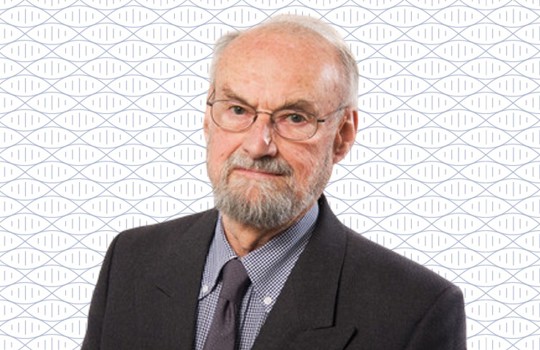
In June we celebrated the 88th birthday of our founder, Sir Edwin Southern.
Revolutionizing molecular biology with the development of the Southern blot, Sir Edwin chose to make this technique freely accessible to the global scientific community, accelerating its growth across the field.
Later, Sir Edwin pioneered the microarray technology. This advancement led to his founding of our company, OGT, where microarrays remain central to our genomics portfolio.
Today, OGT continues to build on his legacy through integrated genomic solutions spanning microarrays, FISH and NGS, supporting laboratories worldwide.
We are proud to be part of a remarkable legacy that continues to shape molecular biology and genomics.
Don’t forget…Our FAS team can be contacted online with free support advice
 Visit International site
 Visit Canada site